

On a bright winter’s morning in Manchester, the day after the iED annual conference and awards dinner, a number of colleagues took the opportunity to join a walking tour of Manchester City Centre, very ably led by Manchester City Council’s City Centre Growth & Infrastructure Team. This provided a valuable opportunity to observe first-hand how long-term, place-based regeneration has supported the city’s economic development. The tour clearly demonstrated the scale of transformation achieved over the past 30 years and highlighted the importance of sustained public sector leadership in unlocking private sector investment and driving growth.
A key takeaway from the tour was the pace and scale of change within the city centre. From a residential population of only a few hundred people in the early 1980s, the extended city centre is now home to approximately 100,000 residents, with further growth anticipated in the coming years. Employment has expanded in parallel, with over 257,000 jobs and a number of key growth sector clusters now located within the city centre. These achievements help to explain Manchester’s continued success in attracting inward investment, retaining graduate talent and strengthening its position as a leading UK city for technology and innovation.
The tour also provided insight into the strategic framework underpinning this growth. Manchester’s Economic Strategy places city centre development at the heart of its ambitions, recognising its importance for employment, innovation and agglomeration benefits. The role of Strategic Regeneration Frameworks was discussed as a means of coordinating development, setting clear expectations around design quality, social value and economic outcomes, while allowing flexibility in delivery and ensuring engagement with local communities.
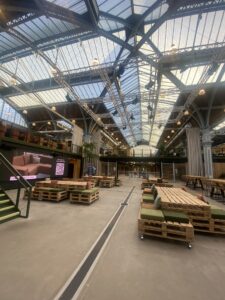
Visits to key regeneration areas illustrated how this strategic approach is being implemented in practice. We started at St John’s, an example of how cultural investment is being used to support wider economic growth and placemaking. It is a major new £1 billion creative district being developed in central Manchester on the former Granada TV Studios site, transforming it into a hub for culture, digital/tech, living, and leisure, featuring landmarks like the Aviva Studios (home to Factory Manchester), new workspaces, hotels, residences, and attractions like the Science and Industry Museum, creating a vibrant urban neighbourhood between Spinningfields and Castlefield. We visited The Campfield Campus, a major tech and creative hub located in historic market halls, which have been transformed into modern flexible workspaces, studios, meeting areas, and hospitality for digital, tech, and creative businesses. It is also home to The Exchange Accelerator and at the weekend hosts a vibrant market for the public.

We then moved on to Sister, the emerging innovation district along the Oxford Road Corridor, whilst enjoying a welcome cup of coffee, we heard from Bruntwood SciTech colleagues about the scale of ambition for this project, housed on a 20 acre former University of Manchester campus. Delivered in partnership with the University of Manchester and Bruntwood SciTech, the development will provide significant new commercial and innovation space, high-quality employment opportunities, new homes and public realm, strengthening links between research, innovation and the wider economy.

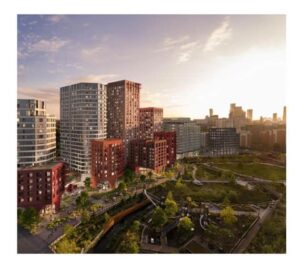
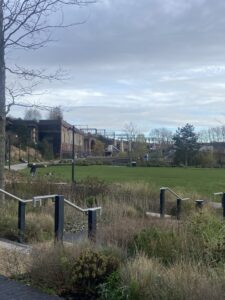
The tour concluded at Mayfield, where the regeneration of a major brownfield site next to Piccadilly Station is creating a distinctive new city centre district. The emphasis on high-quality public realm, anchored by Mayfield Park, alongside a mix of commercial, residential and leisure uses, highlighted how environmental quality and economic growth are being pursued in tandem.
Overall, the walking tour reinforced the importance of a clear long-term vision, strong partnerships and a consistent commitment to regeneration as a means of delivering sustainable and inclusive economic growth in Manchester City Centre.
Our huge thanks go to the City Centre Growth & Infrastructure team at Manchester City Council for organising and delivering this insightful tour.
By Saralyn Chaloner, iED Project Manager and Georgia Siora, Managing Director WECD