
Sign-up here to receive the monthly iED bulletin
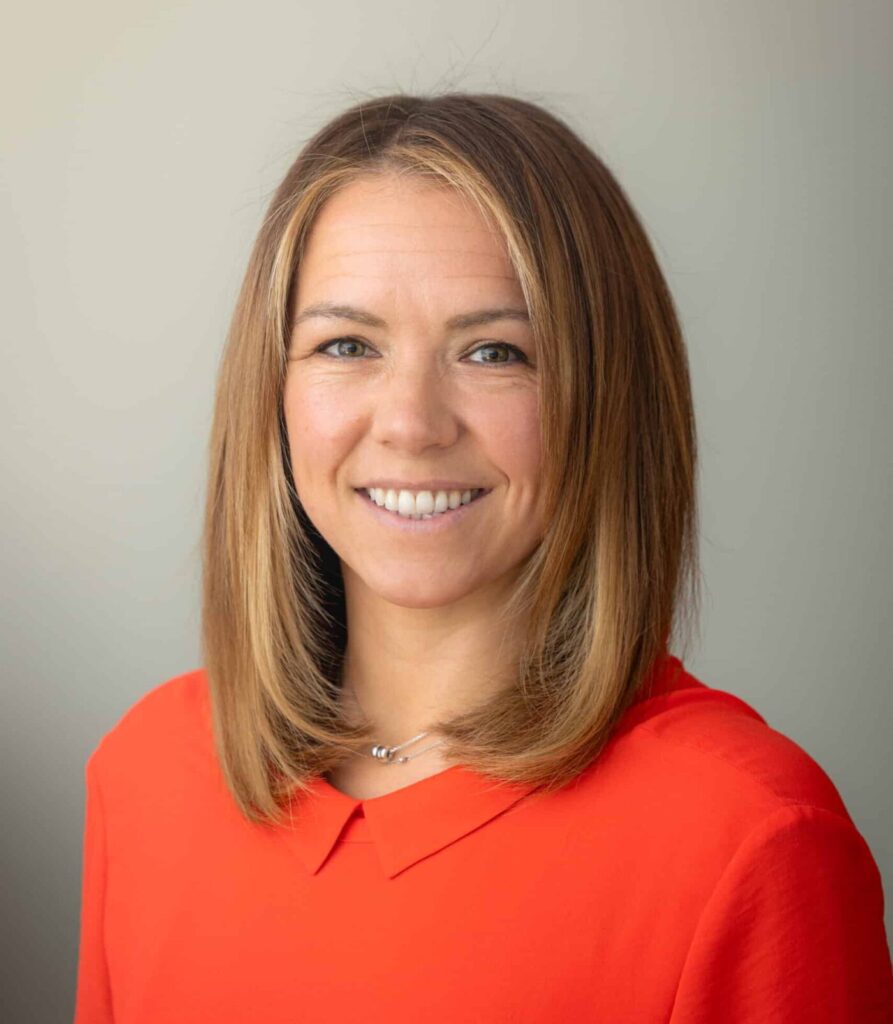
For me, a Place Ambassador is someone who holds the belief when others are uncertain. Someone who can talk honestly about risk and constraint, but still articulate why a place matters, why it’s investable and why now.
It’s not spin or blind optimism. It’s grounded confidence, built on evidence, relationships and a deep understanding of how places work. It means navigating complex polycentric stakeholder matrix of investors, public bodies, institutions, communities and cultural partners, each holding influence at different moments.
Crucially, it’s a role that local government is uniquely positioned to play, sitting at the centre of that network, able to convene, align and move ambition into delivery.
Throughout my economic development roles in local government, I’ve represented place through periods of ambition, challenge and scrutiny. Over time, I realised that my role extended far beyond the job description. This work is rarely straightforward; it’s complex, nuanced and full of potential. It demands creativity, pragmatism, resilience and a deep belief that, together, we can do it, whatever “it” may be.
If you work in economic development right now, you don’t need me to tell you this: certainty is in short supply. Uncertainty is the only reliable factor, and navigating it takes focus, confidence and consistency. Over time, I’ve come to understand my role as something broader than economic development alone, that of a Place Ambassador.
Being a Place Ambassador is about building belief and delivering investment while operating with intention in the middle of complexity. It means maintaining focus when conditions are uncertain, translating ambition into something tangible, and keeping momentum alive when progress feels slow. It requires the ability to move between strategy and delivery, shaping growth plans, unlocking stalled sites and working through viability with realism.
Investors, partners and communities need confidence that someone understands both the opportunity and the constraints and can navigate them with honesty. That’s where local government plays a powerful role as an enabler and convenor, bringing the right people together, aligning priorities and helping investment find a way forward.
None of this happens in isolation. Places don’t move forward because of a single strategy or a single organisation. They move forward through relationships.
At its core, the role is about trust.
Call me naïve, but trusting comes easily to me. I trust that most people are good people. I believe that people present themselves before they present their profession, and that energy and good intentions tend to attract likeminded people. That isn’t always the case so when a situation or partnership doesn’t feel right, I politely and swiftly make my way to the nearest exit.
But once you find your people, they attract even more likeminded people, and you begin to build an extraordinary network. They say your network represents you when you’re not in the room. Mine is the most fascinating, vibrant, intelligent, trustworthy and creative kaleidoscope of kind people from all walks of life and reaches globally- and I love that these people are “my people”.
Relationships are infrastructure
If there is one thing I have learned, it is this.
Relationships are our strongest tool. They are infrastructure.
Working in local government, we are expected to deliver through partnership, acting as conveners and enablers rather than direct delivery bodies. When funding is constrained and risk finely balanced, it is relationships that move intelligence, build trust and unlock momentum. They are what hold steady when plans change and confidence wavers.
The idea of the linear little black book no longer works. What matters now is a living network, a polycentric stakeholder matrix across public, private, cultural, community and institutional partners, where influence, insight and opportunity sit in multiple places at once. Understanding how they connect and when to activate them is now a core economic development and place ambassador skill.
Strong networks allow you to convene with purpose, surface problems early, test viability honestly and align partners around delivery. When investment decisions are finely balanced, it is often this web of trusted relationships that determines whether a scheme stalls or moves forward.
Hold fast
This role demands determination, persistence and resilience. It requires an unwillingness to admit defeat, a solution-focused mindset and an enduring sense of purpose. It is both exhausting and exhilarating.
For me, tenacity has always shown up as a thirst for knowledge and a determination to learn the language of the partners I work with: planners, financiers, developers, community leaders and politicians, and to translate meaningfully between them. When I identify a knowledge gap, I don’t work around it; I fill it. That instinct has taken me on a deliberate journey of lifelong learning, because credibility in place leadership is earned, not assumed.
This matters because belief must be underpinned by evidence, and advocacy grounded in a shared understanding of risk, value and delivery. The ability to move fluently between sectors, translate priorities and hold confidence in complex, constrained environments is what allows local government to convene effectively — and to hold the belief when others are uncertain.
By Una Foster – Economic Development, Inward Investment Croydon Council
Would you like to write for the iED? As part of iED individual and organisation membership, ALL members have the opportunity to publish articles on our website. We are now seeking ideas for contributions from members, including those in our Early Career Network. These can be around any aspect of economic development, insights on work you are undertaking and project successes you would like to share, or any viewpoint you would like to express. If you have an article proposal please contact: Jac Jordan, Institute of Economic Development PR consultant, Tel: 01706 214 340/ 07887 416 182, email: jac@vivapr.co.uk